
North America News
1. MIT engineers have discovered new materials that can rapidly reconfigure metasurfaces or innovate autonomous vehicle technology (Source: floridanewstimes)
According to foreign media reports, engineers at MIT announced the development of a new type of transparent material that can rapidly and reversibly change its atomic structure in response to heat. This material represents a significant advancement for tunable metasurfaces or planar optical devices with nanoscale structural patterns. In the paper, MIT researchers described how to use electrical currents to reversibly alter the material structure of the new metasurface, thereby changing its optical properties. The team also reported a demonstration of a range of tunable optical functions using this platform, including beam steering devices.Hu stated: 'By switching the material to different internal structures, we can send light in both directions back and forth.' Beam steering is crucial for autonomous vehicles.
2. KICT has developed an 'AI-based Automatic Road Pothole Detection System' to improve vehicle safety (Source: electronicsforu)
According to foreign media reports, the Korea Institute of Civil Engineering and Building Technology (KICT) announced the development of an 'AI-based automatic road pothole detection system.' This system will be installed on vehicle windshields to detect potholes on the road in real-time. Potholes not only damage cars but can also potentially cause life-threatening accidents. The system’s visual sensors, installed on the windshield, can capture the road while driving to detect potholes in real-time. The AI inference model uses an encoder-decoder network based on an FCN (Fully Convolutional Network) architecture to semantically segment damage on the road surface. This technology includes a mobile application that collects data using the AI model and a cloud server platform based on maps, which can identify potholes according to the data transmitted from the mobile application.
3. Amazon Patent: Using Images to Determine Vehicle Position and Orientation to Reduce Autonomous Cars' Dependence on GPS (Source: autoevolution)
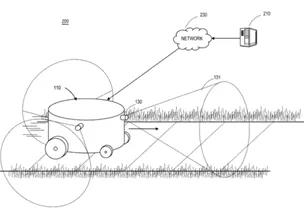
According to foreign media reports, Amazon recently had a patent exposed titled "Systems and methods for utilizing images to determine the position and orientation of a vehicle," which describes a new technology developed by Amazon to help address a major drawback of self-driving cars: reliance on GPS. The patent outlines several methods for determining the location of autonomous vehicles, which can work even in areas without GPS signals. For example, one method involves taking photos of the surrounding environment and then comparing them with reference maps to help the vehicle accurately understand its location. If this method is feasible, the system would be more accurate than ordinary GPS methods, with an accuracy of a few meters, requiring only a simple comparison of a set of photos with those in an existing database.
Europe News
1. The eSync Alliance announces the launch of the new AgentSDK to accelerate automotive OTA development (source: electronicsmedia)
According to foreign media reports, the eSync Alliance has announced a brand-new Agent SDK for the eSync OTA platform, making it easier and faster to integrate ECUs, smart sensors, and other edge devices with the eSync OTA data pipeline in vehicles. This helps automotive OEMs and Tier 1 suppliers quickly configure eSync software to meet device requirements. The new SDK is a downloadable software package available to all eSync Alliance member companies. The SDK includes a template Agent (with libraries) that enables users to generate an eSync Agent for their edge devices. eSync is a software platform for creating a secure two-way data pipeline between the cloud and vehicle electronic terminal devices. It can deploy and update software and firmware over-the-air (OTA) and also collect real-time operational data from in-vehicle devices such as ECUs, domain master ECUs, network gateways, and smart sensors.
2. Researchers at City, University of London have developed an intelligent vehicle identity and access management system to enhance vehicle security (Source: TechXplore)
According to foreign media reports, a graduate student at the Institute of Cybersecurity at City, University of London (ICS) is attempting to patch vulnerabilities in smart cars to prevent hacking and maintain security. SIUV uses a usage control policy to grant permissions to the driver or applications based on their credentials or claims (such as deploying airbags or speed-limiting controls), and then uses those permissions to decide whether to allow or deny access to in-vehicle resources. SIUV also continuously monitors subject claims, resource attributes, and environmental conditions (such as time or location) so that when changes occur, the system can reassess policies, provide updates, or accordingly revoke issued permissions and usage decisions. As car mechanical components increasingly transform into digital systems, from a software perspective, SIUV's research work will be crucial for ensuring the comprehensive safety of future smart cars.
3. German researchers launch the SoLiS battery research project to develop lithium-sulfur solid-state batteries (source: electrive)
According to foreign media reports, the German government funded nearly 1.8 million euros to launch the "SoLiS Multilayer Pouch Cell Lithium-Sulphur Solid State Battery Development" project in July 2021. The project aims to translate promising battery concepts from basic research into industrial applications. This work will now be carried out within the framework of SoLiS: its goal is to develop multilayer electrode cells based on Li-S solid-state technology and evaluate them in an application-oriented manner. In addition to processing and manufacturing techniques, researchers also hope to conduct comprehensive studies and optimization of the electrode's nano- and microstructure. The challenge lies in ensuring close contact between sulfur, conductive carbon, and the ion-conductive electrolyte.
Asia News
1.Samsung Electro-Mechanics develops high-capacity multilayer ceramic capacitors for autonomous vehicles (Source: businesskorea)
According to foreign media reports, on August 12, Samsung Electro-Mechanics announced the development of two types of Multi-Layer Ceramic Capacitors (MLCCs), mainly used for Advanced Driver Assistance Systems (ADAS) essential for autonomous vehicles. Multi-layer ceramic capacitors are core components of electronic devices that control the stable flow of current within electronic circuits and are crucial for smartphones, household appliances, and automobiles. As vehicle functions continue to advance, the number of high-performance semiconductors and components installed in cars is gradually increasing. Especially in autonomous vehicles, to allow various chips to quickly receive signals, a reliable power supply and noise elimination are required. However, as the number of components increases, installation space becomes increasingly limited, making small-sized and high-capacity MLCCs necessary.
2. KICT has developed an 'AI-based Automatic Road Pothole Detection System' to enhance vehicle safety (Source: electronicsforu)
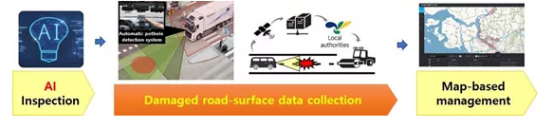
According to foreign media reports, the Korea Institute of Civil Engineering and Building Technology (KICT) announced the development of an 'AI-based automatic road pothole detection system.' This system will be installed on vehicle windshields to detect potholes on the road in real-time. Potholes not only damage cars but can also potentially cause life-threatening accidents. The system’s visual sensors, installed on the windshield, can capture the road while driving to detect potholes in real-time. The AI inference model uses an encoder-decoder network based on an FCN (Fully Convolutional Network) architecture to semantically segment damaged areas on the road. This technology includes a mobile application that collects data using the AI model and a cloud-based, map-enabled server platform that identifies potholes based on the data transmitted from the mobile application.
3. SOLARLIGHTKOREA launches new technology 'dry discharge' to implement 'K-battery' strategy through waste battery recycling (Source: tmcnet)
According to foreign media reports, energy solutions provider SOLARLIGHTKOREA announced in August that it has developed a 'used battery recycling process' that maximizes the value of secondary batteries. Traditional 'wet discharge' technology, which involves immersing batteries in electrolyte, is inefficient due to long drying times, high wastewater treatment costs, and environmental pollution, making it unsuitable for large-capacity discharge. SOLARLIGHTKOREA's core technology—'dry discharge'—can consume remaining capacity and effectively utilize used lithium-ion batteries. Based on SOLARLIGHTKOREA's unique technology, it is possible to diagnose battery packs during charging and discharging, establish pre-treatment facility systems to enable safe storage, transportation, and recycling, and carry out large-capacity discharge processing in large-capacity dry discharge facilities (if constructed).
Domestic NewsDomestic NewsDomestic News
Domestic News
1.The Ministry of Industry and Information Technology has set regulations for OTA online upgrades, guiding OTA towards standardized development (Source: d1ev)
On August 12, the Ministry of Industry and Information Technology (MIIT) issued the "Opinions on Strengthening the Access Management of Intelligent Connected Vehicle Manufacturers and Products" (hereinafter referred to as the "Opinions"), which require strengthening data security management capabilities for autonomous driving function products, especially standardizing software over-the-air (OTA) updates. OTA (also known as over-the-air updates) is a technology that downloads software updates remotely to keep the vehicle's system up to date at all times. The "Opinions" specifically standardize the requirements for software OTA updates, regulating various aspects including enterprise management capabilities, update security, user notifications, and filing procedures. It clearly states that enterprises producing vehicles with OTA capabilities should establish management capabilities that correspond to the vehicle products and the update activities. Before implementing OTA updates, enterprises must ensure that the vehicles comply with relevant laws, regulations, technical standards, and specifications, and must file with the Ministry of Industry and Information Technology.